
Introduction
Keeping students interested during a lesson has never been an easy task. Teachers often introduce new concepts, explain important information, and provide practice questions, but maintaining attention throughout the process can be challenging. Traditional classroom reviews sometimes become repetitive, especially when students are expected to answer similar questions over and over again. This is where Blooket brings something different to the learning environment.
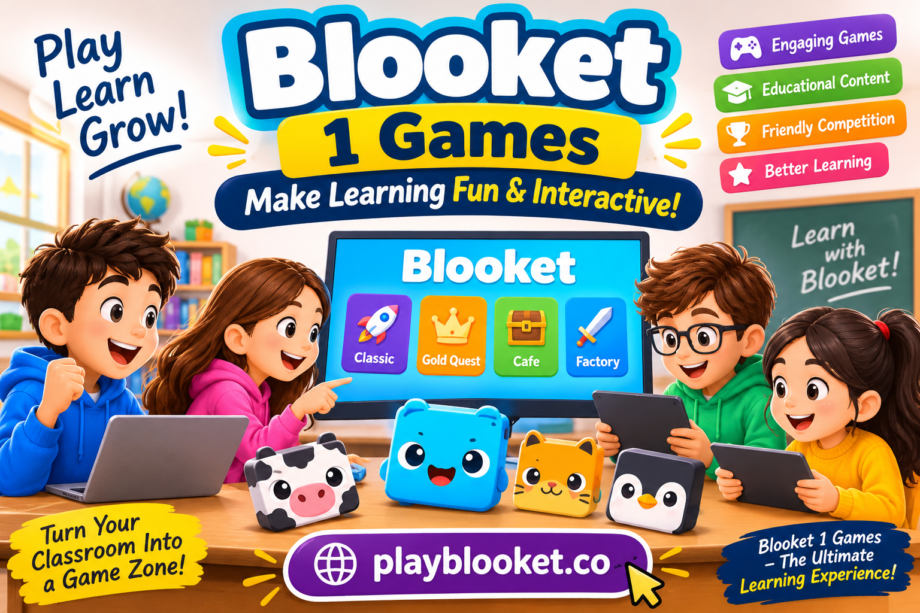
Blooket is an interactive educational platform that combines classroom questions with exciting game mechanics. Instead of treating revision as another ordinary classroom activity, it gives students opportunities to participate in entertaining challenges while practicing important subjects. The platform aims to connect action with education, making the review process more enjoyable for learners of different ages.
One reason students explore blooket 1 games is the opportunity to experience learning through competition, creativity, and participation. Rather than simply reading information from a textbook, players can respond to questions, earn rewards, and work toward completing different game objectives. This approach makes classroom practice feel less like a routine assignment and more like an activity students genuinely want to join.
What Makes Blooket Different From Traditional Classroom Reviews?
Traditional review activities usually involve worksheets, written tests, flashcards, or teacher-led questions. These methods can be effective, but they do not always encourage every student to participate. Some learners may hesitate to answer questions in front of classmates, while others lose interest when the same activity continues for too long.
Blooket introduces a different structure by connecting educational questions with interactive gameplay. Teachers can prepare question sets, select suitable game modes, and invite students to participate. The questions remain connected to the lesson, but the surrounding experience adds excitement and variety.
For example, a teacher reviewing vocabulary might create a question set containing definitions, spelling exercises, and word meanings. Students can answer these questions while participating in a selected game mode. Their responses become part of the activity rather than simply another collection of written answers.
This is one reason blooket 1 games can appeal to students who prefer active learning. The experience encourages them to think, respond, and remain involved throughout the session. It also gives teachers another way to introduce revision without completely changing their existing lesson plans.
Understanding How Blooket Games Work
The basic idea behind Blooket is straightforward. An educator prepares or selects a set of questions and uses it during a classroom activity. Students join the session using the available joining information and participate through their devices.
Once the activity begins, players answer questions as they progress through the selected game experience. Different modes can introduce different objectives, rewards, and challenges. The educational questions provide the foundation, while the game mechanics make the activity more engaging.
For students, this process creates a clear connection between answering correctly and making progress. They are not simply completing a worksheet; they are participating in an activity with goals to achieve.
Teachers can also adjust their approach depending on the subject and learning objectives. A short review session may focus on a handful of important concepts, while a longer activity can cover an entire chapter.
Students interested in blooket 1 games can benefit from understanding that the educational value comes from the questions and the way teachers use them. The game itself creates interest, but meaningful learning still depends on relevant content and thoughtful classroom guidance.
Why Students Enjoy Interactive Learning
Children and teenagers often respond positively to activities that provide immediate participation. A classroom experience becomes more interesting when students have something to accomplish rather than simply listening for an extended period.
Interactive learning can support this involvement in several ways.
Active participation: Students answer questions themselves instead of remaining passive observers. This gives them more opportunities to interact with the lesson.
Immediate engagement: Game-based activities provide an enjoyable reason to pay attention and follow the instructions.
Friendly competition: Some game experiences introduce competitive elements that encourage students to improve their performance.
Learning variety: Teachers can introduce different activities rather than depending entirely on worksheets and conventional quizzes.
Repeated practice: Students can encounter important concepts multiple times, helping them become more familiar with the material.
These benefits explain why blooket 1 games are an interesting option for classrooms looking to introduce variety into everyday revision. However, competition should remain friendly. Students should feel encouraged to learn rather than embarrassed when they make mistakes.
Exploring Different Blooket Game Experiences
One of the platform’s appealing features is its variety of game experiences. Different modes can change the way students interact with the same educational questions. This means teachers do not necessarily need to create entirely new learning materials every time they want to introduce a different activity.
For example, one game mode might emphasize collecting rewards, while another may focus on reaching objectives or managing resources. The specific experience depends on the selected mode and its available features.
This variety can help prevent classroom reviews from feeling repetitive. Teachers can choose an experience that suits the lesson, the available time, and the age group of their students.
When exploring blooket 1 games, students may discover that the same question set can feel different depending on the selected game mode. That flexibility is useful because learning does not always require a completely new collection of questions. Sometimes, changing the activity is enough to make familiar material interesting again.
Educators should still select modes carefully. An exciting activity is useful when it supports the lesson, but complicated game mechanics should not distract students from understanding the questions.
How Teachers Can Use Blooket Effectively
Blooket can become a useful classroom resource when educators connect each activity to a specific teaching objective. Simply launching a game is not enough to guarantee meaningful learning. Teachers should think about what students need to understand and how the selected questions will help them practice.
Here are several practical ways to introduce the platform into a lesson.
1. Start With a Short Knowledge Check
Before explaining a new topic, teachers can use a small question set to understand what students already know. Their answers can reveal familiar concepts and areas that need additional explanation.
This makes it easier to adjust the lesson according to students’ existing knowledge.
2. Review Important Concepts
After completing a chapter, teachers can prepare questions covering its main ideas. Students participate in the activity and revisit information they have already studied.
This approach can make revision sessions more enjoyable while helping educators identify topics that require further attention.
3. Introduce Vocabulary Practice
Language lessons often require students to remember definitions, spelling, meanings, and correct usage. A question-based activity provides another opportunity to practice these skills.
Teachers can include simple questions for beginners and more challenging examples for advanced learners.
4. Encourage Classroom Participation
Some students may feel uncomfortable answering questions publicly. An interactive activity can create another opportunity for them to participate.
Teachers should create a supportive environment where incorrect answers are treated as opportunities to learn.
5. Use Results to Guide Future Lessons
Classroom activities can provide useful feedback about student understanding. Teachers can review the responses and identify subjects that need additional explanation.
The goal should be to use the activity as a teaching resource rather than treating the final score as the only measure of learning.
Can Blooket Support Different School Subjects?
An advantage of question-based learning platforms is their flexibility. The same general format can be adapted to several subjects, depending on the material prepared by the educator.
Mathematics: Teachers can create questions involving multiplication, division, fractions, geometry, and basic calculations. Students can practice solving problems while participating in an interactive activity.
Science: Question sets can cover scientific vocabulary, the human body, ecosystems, planets, energy, and other classroom topics.
English: Grammar rules, sentence structure, reading comprehension, spelling, and vocabulary can all become part of a review activity.
History: Students can practice remembering important dates, historical events, influential figures, and significant developments.
Geography: Questions about countries, capitals, continents, landmarks, and geographical features can provide an enjoyable way to review information.
For learners exploring blooket 1 games, these examples demonstrate that educational gameplay is not limited to a single subject. Teachers can adapt the questions to their curriculum and choose activities that match the learning objectives.
Making Learning More Comfortable for Different Students
Every student has a different learning style. Some prefer reading and writing, while others respond better to visual activities, discussions, or practical exercises. A classroom that uses only one teaching method may not provide equal opportunities for everyone to remain interested.
Interactive review activities can add another option to the learning process. They introduce a different way to approach familiar information and can help students who enjoy participation-based lessons.
However, game-based learning should not replace every other teaching method. Reading, writing, classroom discussions, independent practice, and direct instruction continue to play important roles.
A balanced classroom uses different approaches depending on the subject and the needs of its students. Blooket can be one part of that broader teaching strategy.
Students who enjoy blooket 1 games may find the experience especially useful when they want to practice information in a less formal environment. At the same time, teachers should make sure that students who prefer quieter learning activities also receive appropriate opportunities to participate.
Tips for Creating Better Blooket Question Sets
The quality of a classroom game depends heavily on the questions included in it. Poorly written questions can confuse students, while well-organized material can make an activity both educational and enjoyable.
Here are some useful suggestions for preparing question sets.
Keep questions clear: Use straightforward language and avoid unnecessary complexity. Students should understand what each question is asking.
Match the difficulty level: Questions should be appropriate for the students’ current knowledge. Include a mixture of easier and more challenging questions when suitable.
Cover the lesson properly: Avoid focusing on only one small section of a chapter. Include important concepts from different parts of the material.
Check the answers: Incorrect answer keys can create confusion and reduce the educational value of an activity. Review every question before using it.
Avoid unnecessary repetition: Similar questions can be useful for practice, but a varied question set generally creates a more interesting experience.
Use examples: Real-world examples can help students connect classroom concepts with situations they recognize.
These steps can improve the experience for students using blooket 1 games and help teachers get more value from their preparation time.
The Role of Competition in Educational Games
Competition is an important part of many digital games, and classroom activities are no exception. When students have an opportunity to achieve goals, improve scores, or complete challenges, they may become more motivated to participate.
Nevertheless, competition needs to be handled carefully in educational environments.
Some students enjoy competing against classmates, while others feel uncomfortable when their performance is publicly compared. Teachers should consider these differences before selecting a competitive activity.
A useful approach is to emphasize personal improvement. Instead of focusing entirely on who finishes first, educators can encourage students to understand mistakes, improve their answers, and develop confidence.
The real purpose of blooket 1 games should be to support learning rather than create pressure. A student who answers fewer questions correctly can still gain valuable knowledge from the experience.
Teachers can also introduce cooperative discussions after a game. Reviewing difficult questions as a group helps students understand why an answer is correct and gives them an opportunity to learn from one another.
Using Technology Responsibly in the Classroom
Digital learning tools provide new opportunities, but they also require responsible use. Before introducing an online activity, teachers should consider device availability, internet access, classroom rules, and student privacy.
Not every student has the same access to technology. Some classrooms may have individual devices, while others may need to organize students into groups or use a shared screen.
Educators should also explain appropriate online behavior. Students need to understand that classroom technology is intended for learning during the activity.
Another important consideration is screen time. Interactive educational games can be useful, but they should be balanced with activities that involve reading, discussion, handwriting, and physical participation.
When teachers introduce blooket 1 games as part of a balanced learning environment, the platform can provide an enjoyable digital experience without becoming the center of every lesson.
Common Challenges Students May Experience
Like other online educational platforms, Blooket may sometimes present challenges. Understanding common problems can make the classroom experience smoother.
Joining Difficulties
Students may enter an incorrect game code or experience a connection problem. Teachers can help by displaying the correct joining instructions and giving students enough time to enter the session.
Device or Internet Problems
A weak internet connection or an unsupported device may interrupt participation. Checking the classroom equipment before starting can reduce unnecessary delays.
Confusion About Game Rules
Different game modes may have different objectives. Teachers should briefly explain the rules before beginning so students understand what they need to do.
Focusing Too Much on Scores
Some students may become more interested in winning than understanding the lesson. A short discussion after the activity can bring attention back to the educational content.
These challenges do not mean that digital review activities are unsuitable. They simply show why preparation and classroom guidance are important.
How Parents Can Support Learning Through Games
Parents also have an opportunity to support educational activities outside school. They can encourage children to use learning platforms responsibly and discuss the subjects they are practicing.
For example, a parent might ask a child what they learned during a classroom activity, which questions were difficult, or which topic they would like to practice again.
This kind of conversation helps connect digital learning with everyday educational habits.
Parents should also encourage children to take breaks and balance online activities with reading, outdoor play, and other interests. The purpose of educational technology is to support development, not replace every other activity.
For families exploring blooket 1 games, it is helpful to understand that the platform works best when it becomes part of a wider learning routine. Consistent practice, encouragement, and curiosity are more important than achieving a particular game score.
Why Interactive Review Activities Can Remain Useful
Educational trends continue to change, but the need for effective revision remains constant. Students need opportunities to revisit information, test their understanding, and identify concepts they have not fully learned.
Interactive platforms offer another way to organize this process. Their combination of questions and game mechanics can make review sessions more appealing, particularly when teachers introduce them at suitable moments.
The long-term value does not come from entertainment alone. It comes from using enjoyable activities to encourage meaningful participation and repeated practice.
Blooket provides educators with a flexible option for bringing these elements together. Whether a teacher is reviewing vocabulary, practicing mathematics, or checking understanding after a science lesson, question-based gameplay can add variety to the classroom experience.
The popularity of blooket 1 games also reflects a wider interest in learning experiences that combine technology and education. Students increasingly interact with digital content in everyday life, and thoughtfully selected educational platforms can help connect that familiarity with classroom objectives.
Conclusion
Modern education benefits from teaching methods that encourage curiosity, participation, and consistent practice. While traditional classroom reviews remain valuable, adding interactive activities can create a more varied learning environment.
Blooket offers a different approach by connecting educational questions with entertaining game experiences. Students can participate in challenges, practice important concepts, and enjoy a more active form of revision. Teachers can also use question sets to review lessons, identify knowledge gaps, and introduce variety into their classroom routines.
The most effective results come from using the platform with clear learning objectives. Good questions, suitable game selections, responsible technology use, and supportive teaching all contribute to a positive experience.
Ultimately, blooket 1 games represent an interesting way to bring action into education. When entertainment is combined with thoughtful instruction, classroom review can become an activity that students look forward to while continuing to develop their knowledge and confidence.
