
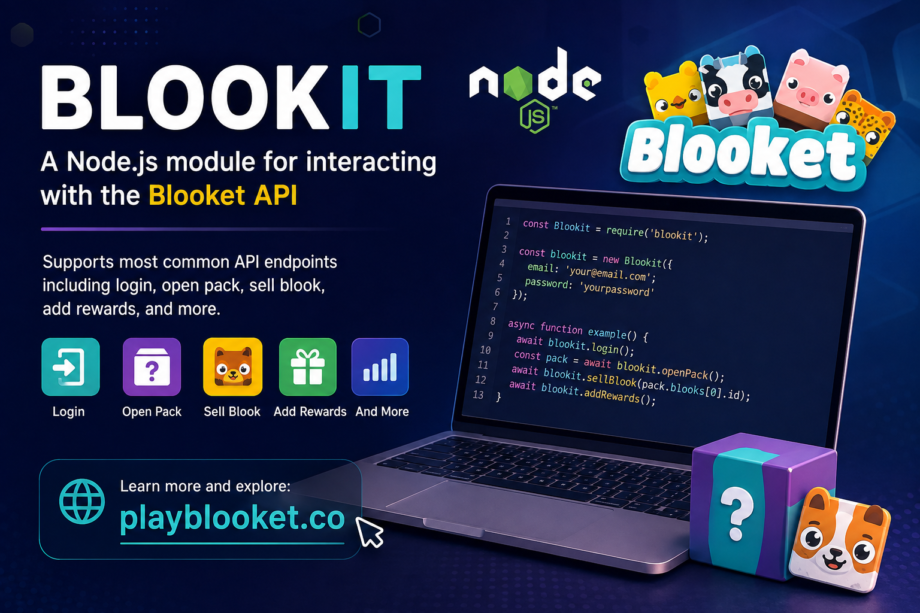
If you have ever worked with Node.js and wanted to connect an application with Blooket-related functionality, you may have come across the idea of using an API module. A Blookit API module for Node.js can make it easier for developers to communicate with supported Blooket endpoints without building every request from scratch.
The main advantage of using a Node.js module is convenience. Instead of repeatedly handling authentication, requests, responses, and error conditions manually, developers can organize these operations through reusable JavaScript functions.
What Is a Blookit API Module?
A Blookit API module is essentially a Node.js package designed to simplify interaction with the Blooket API. Depending on the implementation, it can provide functions for common actions such as logging in, opening packs, selling blooks, adding rewards, and retrieving account-related information.
This type of module is particularly useful for developers experimenting with automation, API integrations, or educational projects where JavaScript is already part of the technology stack.
Getting Started With Node.js
Before working with a Blookit-related module, you will generally need a working Node.js installation and a basic understanding of JavaScript. A typical project begins with creating a new Node.js application and installing the package through npm.
After installation, the module can usually be imported into the project and configured according to its documentation. Developers should always check the package’s current README and API documentation because available methods and authentication requirements can change.
Common API Operations
One of the useful aspects of an API wrapper is that several related operations can be exposed through simple functions.
Login: Authentication allows an application to establish a session where supported by the API.
Open Pack: A supported pack endpoint can allow an application to request pack-opening functionality.
Sell Blook: Some implementations provide a method for handling blook-selling requests.
Add Rewards: Reward-related endpoints may also be available for supported account operations.
These methods can save development time because the programmer does not have to construct every HTTP request manually.
Why Use a Node.js Wrapper?
Working directly with HTTP endpoints can become repetitive. A wrapper provides an additional layer between your application and the API, making the code easier to organize.
For example, rather than spreading request configuration throughout a project, developers can keep API-related operations inside a dedicated module. This can make maintenance easier when an endpoint changes.
Another advantage is consistency. Authentication, request formatting, and response handling can be centralized rather than implemented differently throughout an application.
Important Considerations
When developing with any third-party API, it is important to understand the service’s rules before sending requests. Developers should avoid excessive requests, protect authentication information, and never expose account credentials in publicly accessible source code.
It is also worth remembering that an unofficial Node.js module may stop working if the underlying service changes its API. A package that works today may require updates tomorrow, so checking its maintenance status and documentation is important.
Final Thoughts
A Blookit API module for Node.js can be a convenient way for JavaScript developers to experiment with supported Blooket API functionality. Features such as login, pack operations, blook management, and rewards can be easier to work with when they are presented through reusable Node.js methods.
For anyone exploring blookit from a developer perspective, the most important starting point is understanding how the module works, reading its documentation carefully, and using API functionality responsibly. With a well-structured Node.js project, an API wrapper can turn complicated request handling into a much cleaner development workflow.
