Introduction
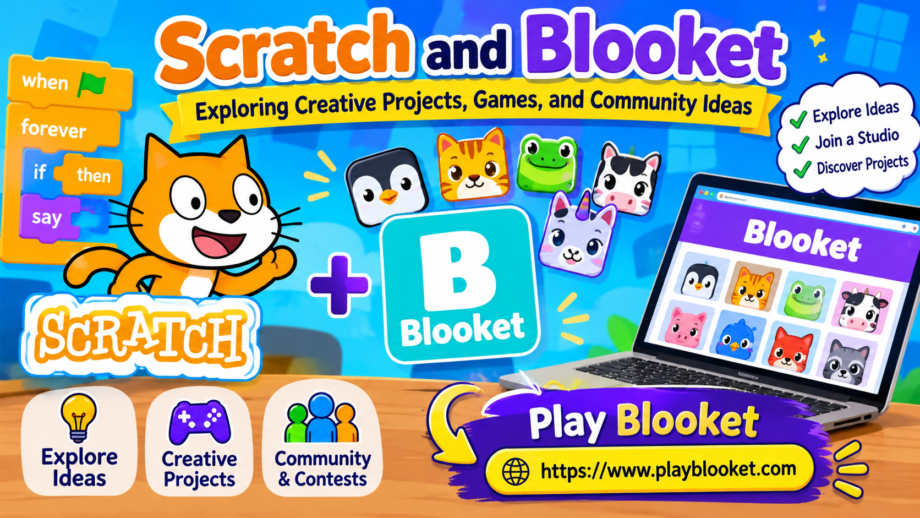
Online learning has changed the way students discover new ideas, practice skills, and share their creativity. Instead of relying entirely on textbooks, learners can now explore interactive games, experiment with digital projects, and connect with people who enjoy similar interests. Two platforms that represent different sides of this experience are Blooket and Scratch. One focuses on educational games and classroom activities, while the other encourages users to build interactive experiences of their own.
A Blooket studio on Scratch brings these interests together in an interesting way. It provides a space where users can explore projects connected with Blooket, discover creative ideas, and see how other community members approach game-related content. Whether someone enjoys educational quizzes, character designs, coding experiments, or playful challenges, this type of community can offer inspiration for new projects.
Understanding how Scratch works also helps beginners appreciate the creative process behind interactive games. Rather than simply playing an existing activity, users can investigate how digital projects are organized and learn how visual programming makes interactive experiences possible.
This guide explores the relationship between Blooket and Scratch, explains what users can expect from a studio, and shares practical ideas for participating in a creative community.
What Is Scratch?
Scratch is a visual programming platform developed by the MIT Media Lab’s Lifelong Kindergarten group. It allows people to create animations, stories, games, and interactive projects by connecting programming blocks instead of writing every instruction as traditional code.
This approach makes programming easier to approach for beginners. Users can experiment with movement, sound, characters, backgrounds, and interactive controls while learning how different instructions work together.
For example, a beginner might create a character that moves when the arrow keys are pressed. Another project could include a quiz that displays a question, checks an answer, and awards points for a correct response. These simple experiments introduce important concepts such as events, conditions, variables, and repetition.
The creative possibilities become broader as users gain experience. A project can begin with a basic idea and gradually develop into a more detailed game with multiple levels, custom artwork, sound effects, and scoring systems.
Another important feature of Scratch is its community. People can share their projects, explore creations from other users, and learn by examining projects that interest them. This makes the platform useful not only for programming practice but also for creative collaboration.
Understanding a Blooket Studio on Scratch
A studio is a collection of projects grouped around a shared topic, interest, or theme. In a Blooket-related studio, that theme connects to the educational gaming platform Blooket.
The studio described here includes a project collection of 30 items and three comments. Its page also features sections such as Projects, Comments, Curators, and Activity. These elements help visitors understand what has been shared and how the community interacts with the collection.
The Projects section is the main place to explore the studio’s creations. Depending on what members have submitted, visitors may find game-inspired designs, animations, fan-made concepts, educational experiments, or other related content.
The Comments section provides a place for discussion. Members can share feedback, ask questions, and respond to projects when commenting is available. The Curators section identifies users who help manage or contribute to the studio, while Activity offers a way to follow changes and participation.
For anyone interested in Blooket-themed creativity, a studio can serve as a starting point for discovering new ideas. It can also show how a shared interest brings different creators together.
How Blooket and Scratch Complement Each Other
Blooket and Scratch serve different purposes, but they can complement each other in an educational setting.
Blooket is primarily designed around quiz-based games and learning activities. Teachers can use its game formats to review material, encourage participation, and help students practice information in an engaging environment.
Scratch, on the other hand, gives users tools to create their own interactive experiences. Instead of selecting an existing quiz game, a learner can experiment with the logic behind a simple question-and-answer activity.
Consider a student studying science vocabulary. The student might use Blooket to review terms with classmates and then create a small vocabulary game using Scratch. The first activity supports practice, while the second encourages the learner to organize information and think about how questions, answers, and scoring should work.
This combination can support different learning goals. Playing a game helps students recall information, whereas creating a game encourages them to think about instructions, structure, and user experience.
A Blooket-themed studio adds another layer by allowing users to explore projects inspired by a familiar educational platform. It offers a way to connect gaming interests with digital creativity without requiring every project to reproduce the original platform.
Exploring the Projects Section
The Projects section is often the most useful starting point for visitors who want to understand a studio’s theme. Instead of looking only at the studio name, visitors can examine the actual projects and decide which creations interest them.
In a Blooket-focused collection, possible project ideas include character illustrations, quiz-inspired animations, educational mini-games, and original designs based on classroom gaming. The precise content depends on what the studio’s contributors have shared.
When exploring projects, it helps to look beyond the thumbnail or title. Read the description, examine the available instructions, and consider what makes each creation interesting. Some projects may focus on visual design, while others may demonstrate programming techniques or introduce a simple challenge.
Scratch projects can also be useful learning examples because their underlying code may be available for inspection. When a project can be viewed in the editor, beginners can study how the creator organized its blocks and built its interactions.
For example, an animated quiz might use an event block to start the activity, a variable to track points, and conditional logic to determine whether an answer is correct. Examining those elements can help a learner understand how an idea becomes a working interactive project.
The goal is not to copy another creator’s work without permission or attribution. Instead, visitors can learn from the approach, develop their own version, and acknowledge the original creator when appropriate.
Explore Ideas and Discover New Possibilities
The phrase “Explore Ideas” captures an important part of creative learning. A useful project does not always begin with a complicated plan. Sometimes it starts with a question, a character, or a small feature that someone wants to test.
For beginners, exploring Scratch projects can reveal how different creators approach the same basic concept. One person might make a simple quiz, while another creates an animated game with several stages. Comparing these approaches can inspire new directions.
Here are several ideas for Blooket-inspired projects:
1. A classroom vocabulary challenge
Create a short game in which players match words with their meanings. Use a score variable to track correct answers and display a message at the end.
2. A character animation
Design an original character and animate its movement, expressions, or reactions. This project is suitable for beginners who want to focus on artwork and simple coding.
3. A question-of-the-day game
Build an activity that displays one question at a time. Players select an answer, receive feedback, and move to the next question.
4. A digital learning poster
Combine illustrations, short explanations, and interactive buttons to present information about a school subject.
5. A community challenge
Invite participants to create projects around a shared theme, such as science facts, mathematics puzzles, or original game characters.
These ideas can be adapted to different ages and skill levels. The important part is to start with a manageable goal and add features gradually as confidence grows.
Understanding the Join Option
A studio page may display a Join option, depending on the user’s account status and the studio’s settings. Joining can be useful for people who want to participate in a community rather than simply browse its projects.
Before joining, visitors should read the studio description and check whether its theme matches their interests. It is also helpful to review the available projects and understand any community expectations.
Joining a studio does not automatically mean that every member can manage it or publish content without restrictions. Studio permissions depend on the platform’s features, account eligibility, and the permissions assigned by its managers.
For users who are new to Scratch, exploring a studio before joining can provide a clearer idea of its purpose. They can first look at the available projects and discussions, then decide whether they want to participate.
Community participation works best when members contribute relevant creations, communicate respectfully, and follow the platform’s rules. These habits help make shared spaces more useful for everyone.
Comments, Curators, and Activity
A creative community involves more than the projects themselves. Discussion and collaboration can help users learn from one another, discover useful techniques, and improve their work.
The Comments section allows conversation around the studio, where available. Constructive comments are particularly valuable for beginners because they can identify what works well and suggest practical improvements.
For example, instead of writing only “Nice project,” a visitor might explain that an animation has smooth movement or that a quiz presents its instructions clearly. Specific feedback gives creators more useful information.
Curators play a different role. Depending on the studio’s setup, they may help organize the collection, manage contributions, or maintain its overall focus. Their responsibilities depend on the permissions granted to them.
The Activity section can help visitors follow changes in the studio. Updates may reveal new contributions or other participation, depending on the information Scratch displays.
For a studio containing 30 projects and three comments, these sections provide different ways to understand its current collection and interaction. The project count indicates the size of the collection, while comments and activity offer additional context about community participation.
Oclette Contests and Creative Challenges
The reference to “Oclette Contests!” suggests a contest-related theme associated with the studio. The exact rules, schedule, and prizes should be checked on the relevant studio or project page rather than assumed.
Contests can be an effective way to encourage creativity. A well-designed challenge gives participants a common objective while leaving room for different interpretations and original ideas.
A Blooket-inspired contest might ask users to design an original character, create a short educational animation, or build a simple quiz game. Participants could be encouraged to explain their creative choices and describe what they learned while working on the project.
A successful contest should have clear requirements. Organizers can specify the submission deadline, acceptable project types, judging criteria, and any restrictions on copied material. These details help participants understand what is expected.
For beginners, a contest does not have to involve complex programming. A thoughtful design, an original story, or a small interactive activity can demonstrate creativity just as effectively as a large project.
Anyone interested in an Oclette-themed challenge should review the actual contest announcement for accurate information. The name alone is not enough to establish whether a contest is currently open or what participants must submit.
Tips for Creating Better Blooket-Inspired Projects
Creating a project becomes easier when the idea is divided into smaller tasks. Beginners do not need to understand every programming concept before they start.
First, decide what the project should accomplish. A quiz might test five vocabulary words, while an animation might demonstrate a character moving across the screen.
Second, sketch the basic layout. Think about where instructions, buttons, characters, and score information should appear. A simple plan can prevent unnecessary changes later.
Third, build the main interaction before adding decorative details. For a quiz, make sure the question appears and the answer is checked correctly. Once the basic logic works, add sound, animation, and visual effects.
Fourth, test the project repeatedly. Try different answers, restart the activity, and check what happens when the player makes a mistake. Testing helps identify problems that may not be obvious during development.
Finally, give the project a clear title and description. Explain what the user should do and what makes the activity interesting. If the project is inspired by another creator, acknowledge that inspiration appropriately and respect the original work’s licensing and sharing terms.
These steps make Scratch more approachable and help creators develop stronger problem-solving habits over time.
Safety and Responsible Community Participation
Online creative communities can be valuable learning spaces, but responsible participation is important, especially for younger users.
Use a suitable account name and avoid sharing private information such as a home address, passwords, personal phone numbers, or school details that should remain private. Follow the platform’s community guidelines and report inappropriate content through the available reporting options.
When sharing a project, use artwork, sounds, and other materials that you created yourself or have permission to use. Giving credit where required helps respect other creators and encourages a healthier creative environment.
It is also wise to distinguish fan-made projects from official Blooket features. A community creation may be inspired by Blooket without being an official product or being endorsed by its developers.
Parents and teachers can help younger learners understand online etiquette, choose appropriate projects, and make good decisions about sharing content.
Frequently Asked Questions
What is a Blooket studio on Scratch?
It is a collection of projects grouped around Blooket or related gaming interests. Visitors can explore shared creations and, where available, interact with the community.
How many projects does the described studio contain?
The studio details provided for this article indicate 30 projects and three comments. These numbers may change as members update the collection.
Can beginners create their own projects?
Yes. Scratch uses visual programming blocks that help beginners experiment with animations, stories, quizzes, and interactive games without needing to begin with traditional text-based coding.
What is the purpose of the Curators section?
It identifies users who have a curatorial role in the studio. Their permissions and responsibilities depend on the platform’s settings.
Does joining a studio mean a user can manage it?
No. Joining and managing are different permissions. A user’s ability to organize or edit a studio depends on the platform’s rules and the access granted to that account.
Are all Blooket-inspired projects official?
No. Community projects may be fan-made creations. Visitors should check the project’s description and source before treating a creation as an official feature.
Conclusion
A Blooket-themed studio offers an interesting meeting point between educational gaming and digital creativity. Its collection of projects, comments, curators, and activity gives visitors several ways to explore what the community has shared.
For beginners, Scratch provides an accessible introduction to programming through animations, quizzes, and interactive games. For more experienced creators, it offers room to experiment with original designs, improve existing ideas, and take part in creative challenges.
The best way to benefit from a studio is to explore its projects thoughtfully, learn from different approaches, and contribute original work when appropriate. Whether the goal is to build a classroom quiz, enter a creative contest, or simply discover new ideas, combining educational interests with hands-on experimentation can make learning more engaging and rewarding.
