Online game communities have a habit of taking a simple idea and turning it into something much bigger. A game introduces a fun collecting system, players become attached to it, and soon other projects begin experimenting with similar concepts. Blooket is a good example of this phenomenon. Its combination of classroom games, collectible Blooks, rarity levels, and playful competition has created a community that enjoys both playing and collecting.
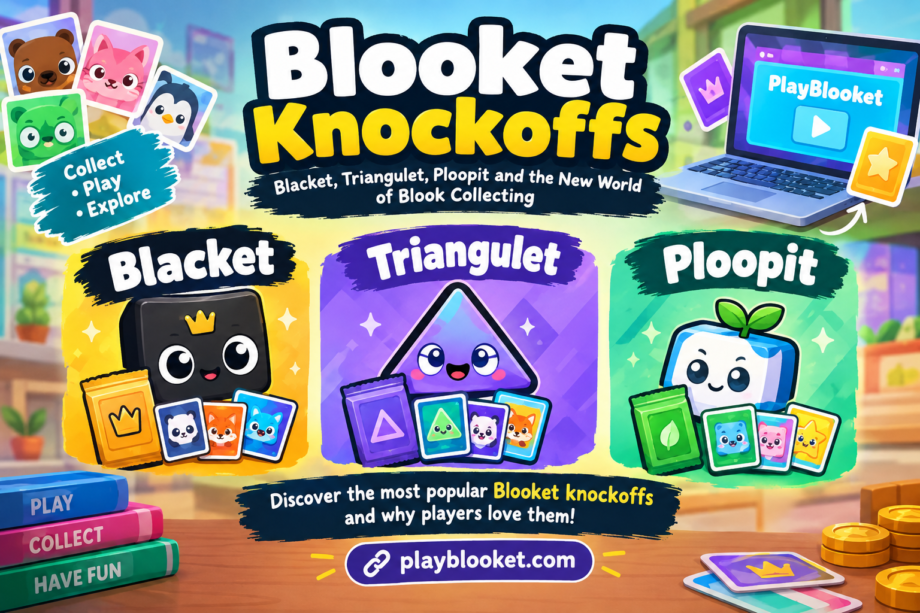
That popularity has also inspired several fan-made projects and alternatives. Among the names most often associated with this space are Blacket, Triangulet, and Ploopit. These projects do not all approach the concept in exactly the same way, but they share an interest in collecting virtual characters and creating a familiar experience for people who enjoy Blooket’s collectible side.
The term blooket knockoffs is commonly used to describe these projects. However, calling them simple copies does not always tell the full story. Some have developed their own collections, interfaces, ideas, and communities. For players, they can be interesting experiments that show how strongly collectible game mechanics can influence online communities.
What Makes Blooket So Easy to Imitate?
One reason Blooket has inspired alternatives is that its basic concept is easy to understand. Players participate in games, earn rewards, unlock Blooks, and gradually build a collection. The collectible element gives users another reason to return even when they are not actively playing a classroom game.
A virtual collection can be surprisingly motivating. Finding a new character, completing a set, discovering a rare item, or comparing collections with friends creates a sense of progress. The characters do not need complicated abilities to be enjoyable. Their rarity and appearance can be enough to make them desirable.
This helps explain why blooket knockoffs often emphasize collecting. Instead of attempting to reproduce every part of the original platform, some projects concentrate heavily on the Blook-style collection system. That narrower focus can appeal to users who are more interested in virtual items than educational gameplay.
Blacket: A Collection-Centered Experience
Blacket is one of the better-known names connected with the Blooket-inspired community. Its identity has been closely associated with collecting characters and interacting with a collection system that feels familiar to people who already understand Blooks.
The appeal of Blacket comes largely from its simplicity. A player who enjoys opening packs, discovering characters, and building a collection can understand the basic attraction without needing a complicated introduction.
Collecting also creates an element of chance. When players do not know exactly what they will receive, opening a pack can feel like a small event. A common character may be useful for completing a collection, while a rarer discovery can become the highlight of a session.
This is an important feature of many blooket knockoffs. They demonstrate that the collecting mechanic can stand on its own as a form of entertainment. The classroom component that surrounds Blooket is not necessarily required for players to enjoy the collection experience.
At the same time, Blacket should be viewed as its own fan-oriented project rather than simply assuming that every feature works exactly like Blooket. Projects inspired by an existing game can change over time, and their communities may develop their own traditions and preferences.
Triangulet and the Appeal of Collecting
Triangulet is another name that frequently appears when people discuss Blook-inspired alternatives. Like Blacket, it is particularly interesting from a collecting perspective.
The attraction of a collection-based game is partly psychological. Players naturally enjoy seeing progress represented visually. A nearly empty collection can create a desire to fill it, while a nearly complete collection can encourage players to search for the final missing items.
Triangulet fits into that broader idea by giving collecting its own identity. Instead of needing a traditional competitive match to make every session worthwhile, the collection itself can become the goal.
For younger players especially, collecting digital characters can resemble collecting stickers, trading cards, or small physical toys. The difference is that a digital collection can change quickly and can potentially contain many different designs.
This is one reason blooket knockoffs have attracted attention beyond the original classroom-game concept. They highlight how a secondary feature—collectible characters—can become the main reason people participate.
Where Does Ploopit Fit?
Ploopit is another project associated with the growing group of Blooket-inspired experiences. Its name may be less familiar to casual players, but it belongs to the same general conversation surrounding fan-created alternatives and collection-based games.
Ploopit demonstrates another interesting aspect of online gaming communities: users do not always want an exact replacement for an established platform. Sometimes they simply want something familiar enough to understand while still being different enough to explore.
That distinction matters. An alternative can borrow a general concept without providing an identical experience. The details of its collection, presentation, community, and gameplay can make it feel different even when the underlying inspiration is obvious.
For this reason, blooket knockoffs can be better understood as part of a wider fan ecosystem. Some may disappear quickly, while others can develop dedicated communities and their own recognizable identities.
Why Do Players Enjoy These Games?
The collecting mechanic is probably the biggest reason these projects remain interesting. There is something satisfying about opening a reward and discovering what is inside.
Rarity also plays an important role. When some characters are easier to obtain than others, players immediately have reasons to continue searching. A common item may help complete a basic set, while an uncommon or rare character can feel like a significant achievement.
There is also a social element. Players can discuss which characters they own, which ones they are missing, and which items they consider the most interesting. Online communities often turn these simple collections into topics of conversation.
Another attraction is nostalgia. People who discovered Blooket through school or casual online games may already understand the appeal of Blooks. When they encounter a similar collection system somewhere else, the familiarity can make the new experience easier to enjoy.
Blooket Versus Its Inspired Alternatives
It is useful to distinguish between the original platform and the projects inspired by it. Blooket was designed around game-based learning, with classroom participation forming an important part of its identity. Its Blooks are integrated into that larger experience.
The alternatives discussed here may put considerably more attention on collecting. That difference changes the reason a player might visit them.
A student might use Blooket because a teacher has selected a particular game mode for a lesson. Someone exploring a collection-focused alternative may instead arrive because they want to unlock characters, examine rarity levels, or simply see what the project offers.
That difference is why comparisons should not focus only on whether one platform is “better.” They serve different interests.
The growth of blooket knockoffs also illustrates how successful game mechanics can inspire experimentation. Once players understand a system, developers and fan communities can imagine new ways to present similar ideas.
The Importance of Community
No collection-based game can rely entirely on its characters. Community plays a major role in determining whether an online project stays interesting.
Players create guides, discuss rare items, share screenshots, and exchange tips. Even a relatively simple game can become much more engaging when people have an active community around it.
This is especially true for fan-created projects. Their audiences are often interested not only in the game itself but also in discovering updates, new characters, and changes made by the developers or community.
The community can also influence which items become popular. Sometimes an unusual character becomes memorable because players collectively decide that it is funny, attractive, or simply rare.
That social process gives blooket knockoffs an identity beyond their technical features. A project may start with inspiration from another game, but its community can gradually give it a personality of its own.
Are They Really “Knockoffs”?
The word “knockoff” can sound negative, but online gaming communities often use it casually. It can simply mean a project that takes inspiration from an established concept.
There is an important difference between inspiration and direct duplication. A game can use familiar ideas such as collecting, rarity, packs, and character-based rewards while still developing its own presentation and features.
At the same time, users should be sensible when exploring unofficial platforms. They should pay attention to where they sign in, what information they provide, and whether a site appears trustworthy. A familiar-looking interface does not automatically mean that a project has the same standards or protections as an established service.
This is particularly important for younger players. Parents, teachers, and students should be cautious about entering account information into unfamiliar websites.
Why the Concept Continues to Work
The continued interest in these games comes down to a simple formula: familiarity plus discovery.
Players already understand the basic idea of collecting characters. What keeps the experience interesting is the possibility of discovering something they have not seen before.
That principle exists across gaming. Trading cards, character skins, pets, badges, achievements, and cosmetic items all use variations of the same motivation. A collection gives players a visible record of their progress.
Blooket made this concept particularly recognizable through its Blooks. The projects inspired by it show that the underlying idea can be adapted in different ways.
As long as players enjoy collecting, there will likely be interest in new projects that experiment with similar mechanics. Some may focus on rarity, some on presentation, and others on community features.
The Future of Blook-Inspired Games
The most interesting part of the blooket knockoffs conversation may not be the individual projects themselves. It is the way online communities transform popular ideas.
A successful game rarely remains isolated. Players create fan art, guides, communities, alternatives, and experiments. Developers can then learn from what players enjoy and introduce new ideas of their own.
Blackett, Triangulet, and Ploopit represent different points within that broader ecosystem. Their appeal comes from taking a familiar collecting concept and presenting it in alternative forms.
For players, the best approach is to explore responsibly and judge each project on its own merits. An alternative does not have to replace Blooket to be interesting. It can simply offer a different way to enjoy a familiar style of digital collecting.
Final Thoughts
The popularity of blooket knockoffs such as Blacket, Triangulet, and Ploopit shows how powerful a simple collecting mechanic can become. What begins as a feature inside an educational game can inspire completely different communities and experiences.
Blooket remains distinctive because its collectible system exists alongside classroom-focused gameplay. Meanwhile, alternatives can place greater emphasis on the collection itself, giving players another reason to explore virtual characters and rarity systems.
Whether someone calls them alternatives, fan projects, or blooket knockoffs, these games are interesting examples of how online communities build upon ideas they already enjoy. Blacket, Triangulet, and Ploopit each contribute to that conversation in their own way.
Ultimately, the appeal is easy to understand: collect something new, discover something rare, complete a set, and share the experience with other players. That simple loop has remained powerful across gaming for years—and it is likely to continue inspiring new projects for years to come.
