
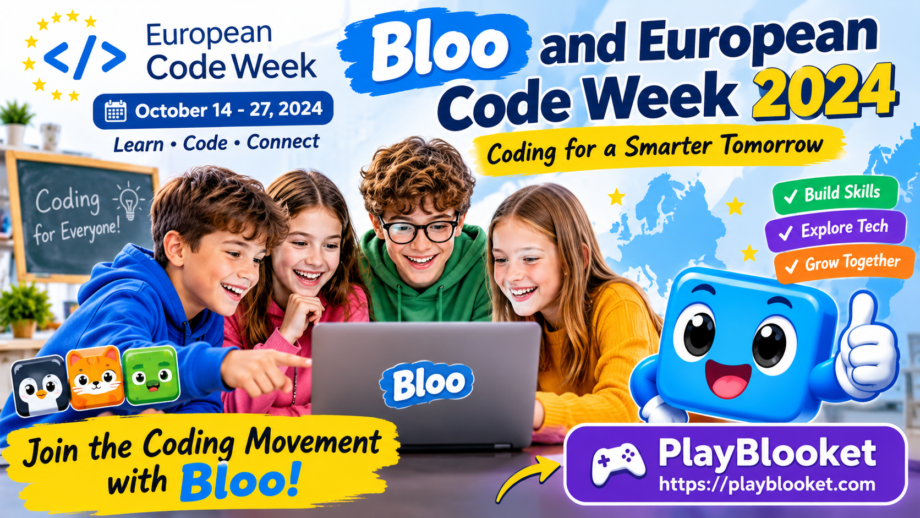
Technology is becoming part of almost every aspect of modern life. From education and communication to healthcare, entertainment, and business, digital tools influence how people learn, work, and interact. However, understanding how technology works is just as important as knowing how to use it. This is one of the reasons European Code Week continues to attract attention from schools, educators, families, and technology enthusiasts across the continent.
Held from October 14 to October 27, 2024, European Code Week brought communities together through programming activities, educational workshops, creative challenges, and opportunities to explore new technologies. The initiative encouraged people of different ages and experience levels to discover coding in an accessible environment. Rather than presenting programming as a difficult subject reserved for specialists, the event showed how it can become an enjoyable way to solve problems and develop new ideas.
Within this broader conversation, Bloo can represent the curiosity and creativity that make digital learning more approachable. Whether someone is discovering their first programming concept or experimenting with a personal project, the important thing is having the confidence to explore. The spirit of Bloo is connected to the idea that learning technology should involve experimentation, collaboration, and practical experiences.
European Code Week was more than a collection of technical lessons. It was an opportunity to connect individuals, encourage digital participation, and demonstrate how coding can create possibilities for future generations.
What Was European Code Week 2024?
European Code Week is a grassroots initiative designed to make coding, computational thinking, and digital literacy accessible to people throughout Europe and beyond. It brings together teachers, students, volunteers, organizations, businesses, and technology enthusiasts who believe that programming should be easier for everyone to explore.
The 2024 edition took place between October 14 and October 27. During these two weeks, educational institutions and community organizations arranged activities that introduced participants to different aspects of technology. Some sessions focused on beginner programming, while others explored robotics, artificial intelligence, creative digital projects, and problem-solving exercises.
One important characteristic of the initiative is its inclusive approach. Participants do not need professional programming experience to become involved. A student writing a simple sequence of instructions, a teacher introducing computational thinking, and an adult attending a digital skills workshop can all contribute to the same wider learning movement.
This approach makes Bloo an interesting concept when discussing accessible technology education. It reflects the importance of giving beginners a welcoming starting point rather than expecting them to understand complicated programming languages immediately.
The initiative also encouraged organizers to share their activities through the official Code Week platform. This helped communities discover opportunities happening in different locations and made it easier for people to participate.
Why Coding Education Matters in Modern Europe
Digital technology is changing the skills people need in education and employment. Many everyday services depend on software, databases, automated systems, and connected devices. Understanding the principles behind these technologies can help individuals become more confident digital citizens.
Coding education develops several abilities that are useful beyond computer science.
Problem-solving: Programming encourages learners to divide large challenges into smaller steps. Instead of becoming overwhelmed by a complicated task, they learn to identify individual problems and work through them.
Logical thinking: Writing instructions requires people to consider order, conditions, and possible outcomes. These habits can improve reasoning in many other subjects.
Creativity: Coding allows learners to turn ideas into practical projects. They can create animations, simple games, interactive stories, and useful digital tools.
Persistence: A program does not always work correctly on the first attempt. Finding mistakes and testing solutions teaches patience and encourages learners to improve their work.
Collaboration: Many technology projects involve several people sharing ideas, reviewing code, and helping one another overcome challenges.
Bloo fits naturally into this educational discussion as a reminder that beginners benefit from approachable learning experiences. When technology feels welcoming, more people are willing to experiment and discover what they can create.
The wider objective is not necessarily to turn every participant into a professional software developer. It is to help people understand the digital world and become more comfortable using technology creatively and responsibly.
1. Making Programming Accessible to Beginners
One of the strongest messages of European Code Week 2024 was that coding does not have to begin with complicated technical instructions. Beginners can start with simple activities that introduce programming concepts through familiar examples.
For instance, a teacher might ask students to write instructions for moving a character across a digital screen. Learners can decide which direction the character should move, how many steps it should take, and what should happen when it reaches a particular point.
These activities introduce important ideas such as sequences, commands, and logical decisions without requiring extensive technical knowledge.
A Bloo-inspired learning exercise could involve creating a small interactive story. Students might choose a character, design a setting, and develop instructions that determine what happens when someone selects different options. This gives them an opportunity to understand how programming controls digital experiences.
The advantage of beginner-friendly exercises is that they provide visible results. Learners can immediately see whether their instructions work and make adjustments when necessary.
This type of practical introduction can also help reduce the fear that sometimes surrounds computer science. When students discover that programming involves creativity and experimentation, they may become more interested in exploring advanced subjects.
2. Schools as Important Technology Learning Centers
Schools play a significant role in helping young people develop digital skills. Teachers can introduce programming through dedicated computer science lessons or integrate technology into subjects such as mathematics, science, art, and geography.
European Code Week encouraged educational institutions to participate by organizing activities suitable for their students. These could include classroom demonstrations, coding competitions, collaborative assignments, or introductory programming sessions.
A school does not need an expensive computer laboratory to introduce computational thinking. Some activities can be completed using ordinary classroom materials. Students can arrange instruction cards, follow logical sequences, or work together to solve problems without using a computer.
Digital exercises can then build on these foundations.
Bloo can serve as a useful example of how a recognizable project theme might encourage students to participate. A class could create a small digital presentation, design an animated character, or develop a basic quiz as a group assignment.
Teachers can also encourage students to explain their decisions. Asking why a particular instruction was selected helps learners understand the reasoning behind their work rather than simply copying steps.
These experiences can make technology education more engaging and help students recognize connections between classroom learning and real-world applications.
3. Bringing Communities Together Through Technology
European Code Week was designed to connect people, not simply introduce programming languages. Community participation allows individuals with different experiences to share knowledge and learn from one another.
Libraries, youth centers, nonprofit organizations, universities, and local technology groups can all contribute to digital learning. A library might arrange a beginner coding afternoon, while a community center could organize a robotics demonstration or a workshop about online safety.
Such activities can make technology education available to people who might not otherwise have access to specialized training.
A Bloo-themed community challenge could involve small teams working together to design a digital solution for an everyday problem. One group might develop an idea for reducing food waste, while another could explore ways to improve communication within a neighborhood.
The projects do not need to be complicated. Their value comes from the process of identifying a challenge, discussing possible solutions, and testing creative ideas.
Community activities also create opportunities for people of different generations to work together. Younger participants may be comfortable experimenting with digital tools, while older participants can contribute professional experience, practical knowledge, and different perspectives.
This exchange helps make digital learning a shared experience rather than an isolated classroom activity.
4. Exploring Artificial Intelligence and Emerging Technologies
Artificial intelligence became an important part of technology education discussions during 2024. As AI tools became more visible in everyday applications, educators increasingly recognized the importance of helping students understand their capabilities and limitations.
European Code Week provided opportunities to introduce learners to subjects beyond traditional programming. Activities could explore data, automated systems, machine learning concepts, and the ways technology influences everyday decisions.
Google also highlighted AI literacy during the 2024 celebration, working with Women Techmakers to encourage young people to understand emerging technologies. Its activities included opportunities for educators and students to explore AI-related learning.
The Bloo concept can be extended into a beginner-friendly discussion about how intelligent systems work. Students could compare ordinary computer instructions with systems that identify patterns in information.
For example, a simple classroom activity might ask learners to organize pictures into categories. They could first create their own rules and then discuss how a computer might use examples to recognize similar patterns.
It is important to explain that AI systems are not automatically correct. They can produce inaccurate results, reflect limitations in their training information, or misunderstand a question.
Teaching these limitations alongside practical applications encourages responsible technology use.
Understanding AI is becoming an important part of digital literacy because people need to evaluate information, recognize potential risks, and make informed decisions when using automated tools.
5. Encouraging Girls and Women to Explore Technology
Building an inclusive technology community requires more than making coding lessons available. Young people also need encouragement, positive examples, and opportunities to see themselves represented in technology-related careers.
Women and girls have made important contributions to computing throughout its history, yet gender representation remains an important issue across parts of the technology industry.
European Code Week 2024 highlighted the importance of inspiring more young women to explore digital skills and technology careers. Collaborations involving Women Techmakers helped bring attention to AI literacy and the contribution of women in technology.
Schools and community organizations can support this objective by creating welcoming workshops, introducing students to women working in technical professions, and encouraging mixed teams to collaborate.
A Bloo learning project could give every participant an equal opportunity to suggest ideas, take responsibility for different tasks, and present the results of a group activity.
The emphasis should be on ability, curiosity, and teamwork rather than assumptions about who is naturally suited to programming.
When young learners see technology as a field open to everyone, they may feel more confident exploring subjects such as software development, cybersecurity, robotics, and artificial intelligence.
6. Learning Through Games and Interactive Challenges
Games provide a practical way to introduce programming concepts because they combine clear objectives with immediate feedback. Instead of only reading explanations, learners can interact with a system and observe how their decisions influence the result.
A simple coding game might ask participants to move an object through a maze. To complete the challenge, they must arrange commands in the correct sequence and adjust their instructions when the character reaches an obstacle.
More advanced activities can introduce loops, conditions, variables, and basic algorithms.
Bloo can become a creative theme for this kind of educational exercise. For example, learners could design a character-based challenge in which a player collects objects, answers questions, or completes different levels.
The educational value comes from the decisions involved in building the experience. Students must think about what should happen, identify the required instructions, and test whether the final result behaves as expected.
Teachers can make these exercises more collaborative by assigning different responsibilities. One student might develop the story, another could organize the instructions, and a third could test the finished project.
This approach makes programming less intimidating while demonstrating that technology projects often require several types of skills.
Interactive challenges also help learners remain engaged because they can see a connection between their effort and the outcome.
7. The Role of Teachers, Volunteers, and Technology Enthusiasts
Successful digital education depends on people who are willing to share their knowledge. Teachers, volunteers, programmers, students, and community organizers all contribute to making coding more accessible.
European Code Week operates through a broad network of participants who organize activities and encourage others to get involved. Its community-driven approach allows different countries and organizations to develop activities that reflect their own educational needs.
Teachers are especially important because they understand the learning requirements of their students. They can select suitable activities, explain difficult ideas in simpler language, and help learners progress at a comfortable pace.
Volunteers can provide additional support by sharing practical experience. Someone working in software development, for example, might demonstrate how a basic programming concept is used in a professional project.
A Bloo-based introductory workshop could bring these groups together. An experienced volunteer might guide participants through a small project, while a teacher explains the educational objectives and helps students reflect on what they have learned.
This cooperation makes digital learning more valuable because participants receive both technical guidance and educational support.
It also creates relationships that can continue after a particular event has finished.
8. How People Could Participate in European Code Week
One reason European Code Week attracted a wide audience was its flexible participation model. People could join an existing activity or organize something suitable for their own school, workplace, or community.
The official platform provided an activity map where visitors could discover registered events. Organizers could also submit their own activities and share them with the wider community.
Here are several practical ways people could take part:
- Students: Join a coding challenge, experiment with a beginner programming tool, or collaborate on a digital project.
- Teachers: Introduce a short programming lesson, organize a classroom activity, or connect with other educators.
- Parents: Explore educational technology activities with children and encourage them to experiment with creative projects.
- Businesses: Support local workshops, provide mentors, or introduce participants to technology careers.
- Libraries: Arrange accessible coding sessions and provide learning resources.
- Technology enthusiasts: Share knowledge, volunteer at events, or help beginners understand programming concepts.
A Bloo-inspired activity could be included in any of these settings, provided it has a clear learning objective. For example, a group could build a simple quiz, create an animated presentation, or develop instructions for solving a practical problem.
The most important requirement is participation. People should feel comfortable asking questions, making mistakes, and trying different approaches.
9. What European Code Week 2024 Can Teach Future Generations
Although the October 2024 celebration has ended, its broader lessons remain relevant. Digital skills cannot be developed through a single workshop or annual event. They require regular practice, access to useful resources, and opportunities to apply knowledge in different situations.
The experience of European Code Week demonstrated how educational institutions and local communities can contribute to a shared digital learning culture.
It also highlighted the importance of connecting programming with real-world challenges. Students become more interested when they understand why a particular skill matters and how it can help them create something useful.
The Bloo concept reinforces this message by emphasizing curiosity, practical experimentation, and accessible learning. It is a reminder that even small projects can become meaningful starting points for developing more advanced abilities.
Future technology education should also include subjects such as digital safety, privacy, information evaluation, and responsible AI use. Learning how to create technology is important, but understanding its impact on society is equally valuable.
Young people who develop these skills can become more confident participants in an increasingly connected world.
Keeping the Spirit of Coding Alive Throughout the Year
European Code Week may have a dedicated celebration period, but learning opportunities should not be limited to October. Schools and communities can continue organizing activities throughout the year.
A simple monthly coding challenge can encourage students to keep practicing. Teachers might introduce one new concept each month, while libraries could offer beginner workshops for people interested in developing their digital skills.
Families can also support technology learning at home. Building a small game, exploring a programming tutorial, or discussing how everyday applications work can create valuable learning experiences.
Bloo can remain part of this approach as a recognizable theme for creative activities and beginner projects. Participants can gradually move from simple exercises toward more complex tasks as their confidence improves.
Organizations can also strengthen their programs by sharing successful teaching methods and connecting with other communities. Collaboration helps organizers discover new ideas and avoid treating digital education as a challenge that each institution must solve independently.
The goal is to create an environment where technology learning feels accessible, useful, and enjoyable.
Conclusion
European Code Week 2024, held from October 14 to October 27, demonstrated how coding can bring people together through education, creativity, and collaboration. Schools, teachers, volunteers, businesses, and local communities all had opportunities to encourage digital participation and introduce programming to new audiences.
Its wider message remains important: digital skills should be accessible to people regardless of their age, background, or previous technical experience.
Bloo represents the curiosity and creative thinking that can help beginners approach technology with confidence. From interactive games and classroom exercises to AI literacy and community projects, there are many ways to make coding a meaningful learning experience.
The next generation will encounter technologies that continue to change how society works. Giving people the confidence to understand, question, and create with these tools is an important step toward a more digitally capable Europe. The real success of a coding celebration is not simply the number of activities completed, but the interest and motivation it inspires long after the event ends.
